REAL HEROES DON’T WEAR CAPES

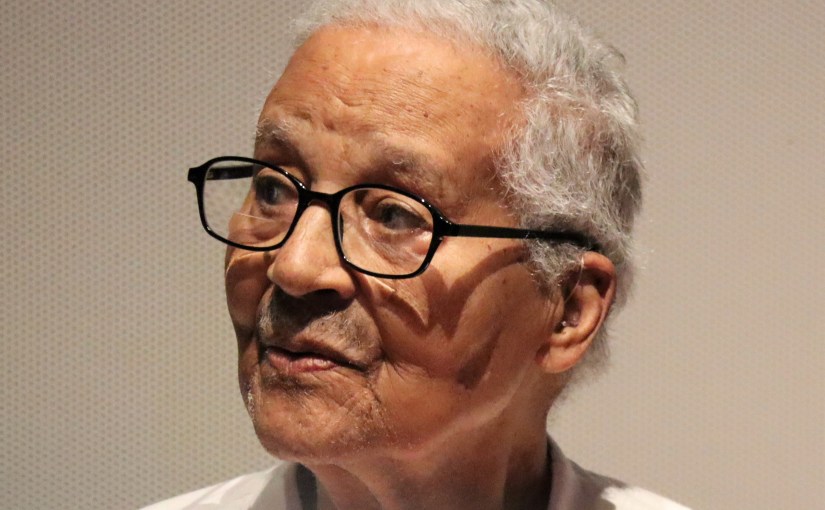
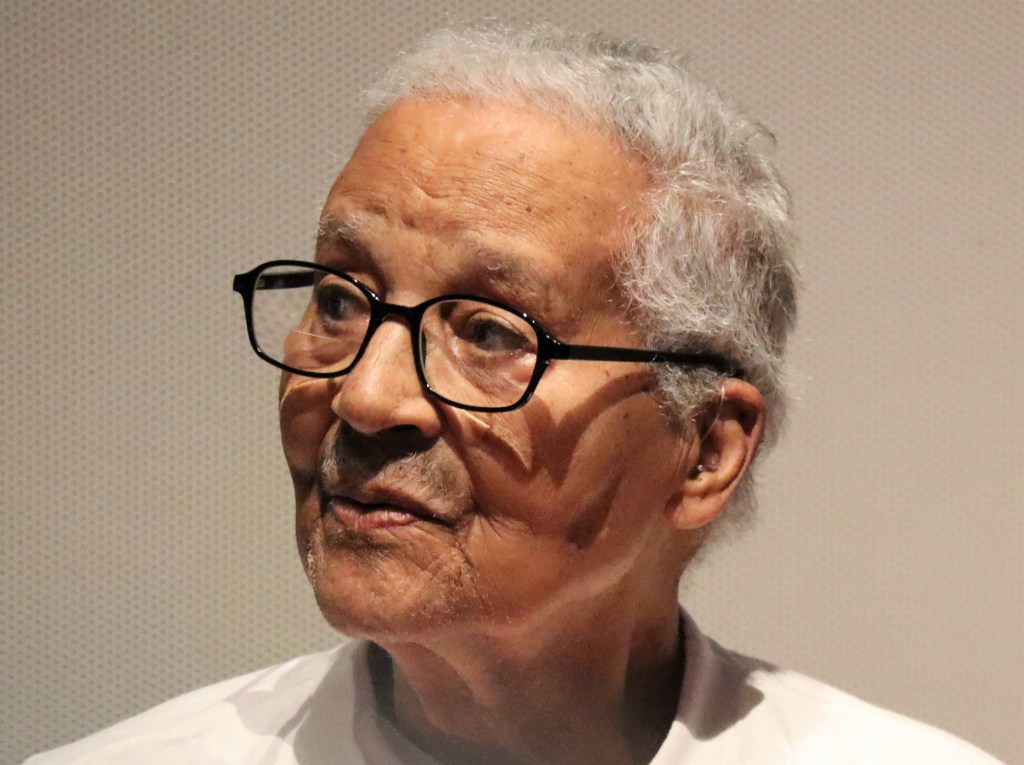
Gen. Charles McGee – Author’s Photo

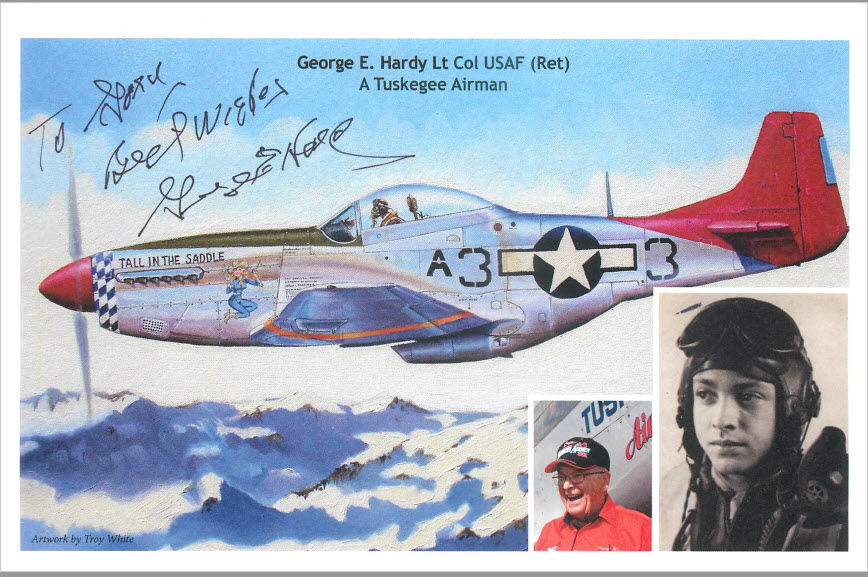
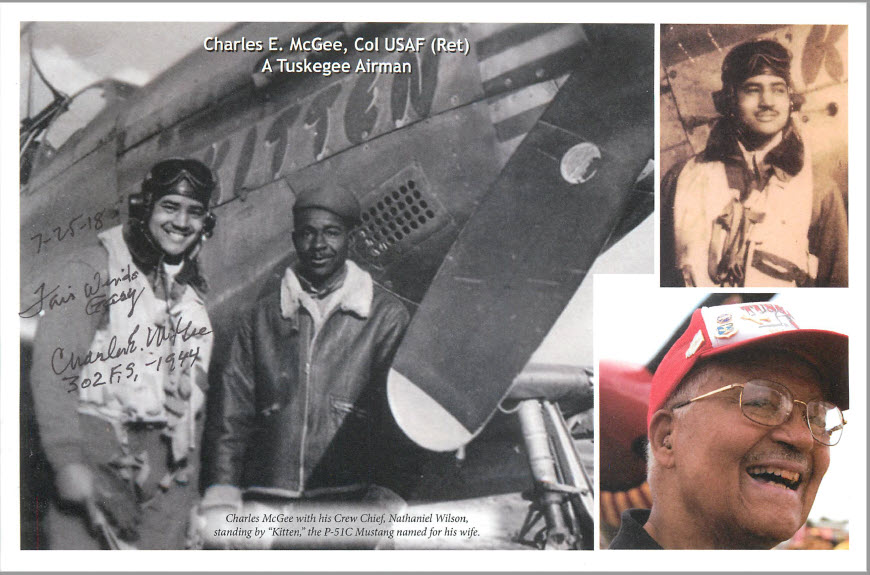
Brigadier Gen.  Charles McGee died on January 16, 2022 and was laid to rest in Arlington Cemetery on June 17, 2022. The news left me with sadness as I reflected upon the loss of yet another great American hero. I then began to reflect upon other heroes that I have met, particularly at Oshkosh, including General McGee’s good friend, Col. George Hardy, and famous WASP pilot Nell Bright. Having heard these individuals, and many others, speak in person, I have come to understand that heroes are ordinary people who do extraordinary things. Real heroes don’t wear capes.

When visiting Oshkosh AirVenture (#OSH, #Airventure), I take advantage of every opportunity I can to see and listen to these heroes of the past and present. I had the privilege of first seeing and meeting General McGee and Col. Hardy at Oshkosh when I visited the Red Tail Squadron promotional video, Rise Above, that was playing in a trailer near the Pioneer airport in 2018.  Both men had been part of the Tuskegee Airmen, the famous all-black fighter pilot squadron that trained in Tuskegee, Alabama and was established during World War II .
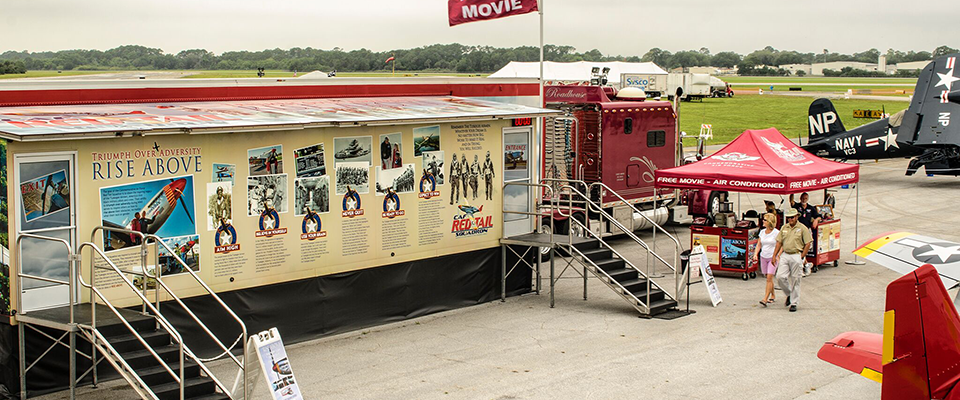
Tuskegee Airmen Theater Trailer Airventure 2018 – Courtesy of EAA

Resented, not respected, and treated with suspicion at first, the squadron went on to become a highly decorated group of fighters and the squadron of choice for bombers needing escort.  Take the time to look up the history of the Tuskegee Airman, their difficult path to becoming aviators, and then their struggle to be allowed to effectively serve in combat. The history is too long to set forth in this article.
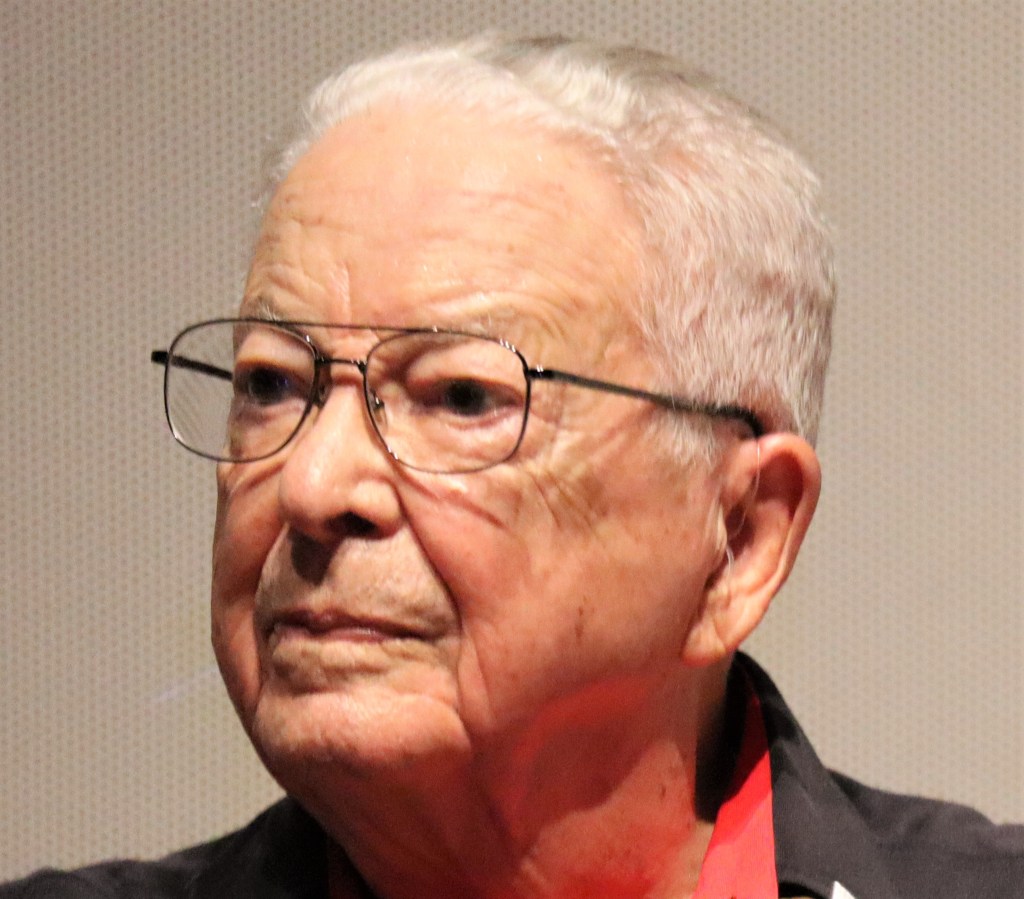
Col George Hardy – Author’s Photo

What gentle and wonderful men! They were gracious, friendly, outgoing people whose fame did not turn them into prima donnas. On that first meeting, then-Colonel Charles McGee and Col. Hardy autographed a biography of Gen. McGee that was written by his daughter. The book is now a very cherished possession.

At Oshkosh AirVenture 2021, I had the opportunity to hear Gen. McGee and Col. Hardy on two occasions. At the second presentation, they were joined through Zoom video conference by Nell Bright, one the women who served as a WASP. What an extraordinary hour!

Trailblazing is hard work. You have to cut your own path through the brush or carve the trail out of the mountain to get where you want to go. Each yard of path gained is hard-earned. Each of these three individuals was a trailblazer in his or her time. Black Americans were treated as truly second-class citizens, enduring racist attitudes, both legal and de facto, which restricted opportunities that were taken for granted by others. Flying in the 1940s was a man’s game, but the women who became the WASPs demonstrated that they were fully capable and qualified to operate any type of aircraft that was in the fleet. But for all of them, the path was not easy, and perseverance and determination were keystones in their ability to accomplish the great things they achieved in their lives. Self-pity was not to be tolerated in any way.

Both Gen. McGee and Col. Hardy were highly articulate in their presentations, are clearly well-educated men, and they spoke of the efforts that it took on their part to become successful career Air Force officers. They spoke without rancor, without hostility towards others, and expressed a deep-rooted love and patriotism for their country. These men were willing to die for a country for which they were not yet receiving the full benefits of their citizenship. In these times of entitlement, it was heartwarming to see two men who appreciated the greatness of the country they lived in, warts and all.
Nell Bright (nee Stevenson) was a woman pilot when they were not very common, and she was determined to serve her country. She grew up in Canyon, Texas, graduated West Texas State in 1940, and started flying lessons in 1941.  She obtained her license in 1942 with 75 hours in a Taylorcraft. Seeing an article in Flying Magazine about women pilots being wanted, she wrote in, was interviewed in Fort Worth, Texas, was accepted, and training began.  She received her training at Sweetwater, Texas Avenger Field in 1943. Her personality leaps through the screen, and she was and is clearly a force to reckoned with!  
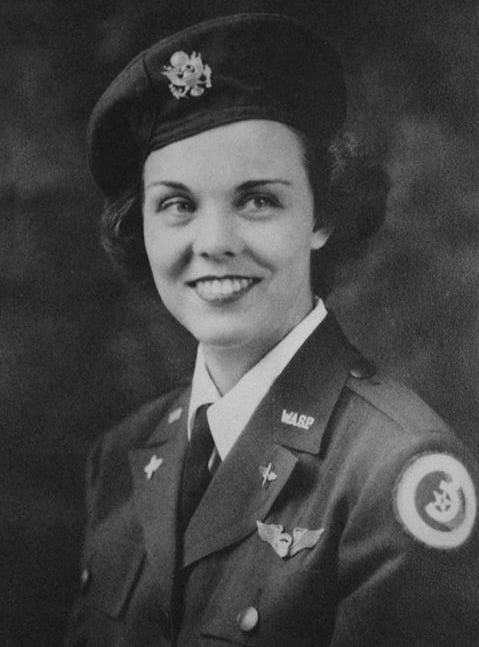
Nell Bright as a WASP – Courtesy Commemorative Air Force

The Women’s Airforce Service Pilots a/k/a Women’s Auxiliary Service Pilots (WASP) was an Army Air Forces program created to train women as pilots to test and ferry aircraft and train other pilots so that men might be freed up for combat. The women had to hold a pilot’s license when they joined but were then trained in Army procedures; predominately, at Avenger Field in Sweetwater, Texas.   In an afront to these women, after the war the WASP were disbanded.  The final WASP pilot class graduated on December 7, 1944, but the WASP were disbanded two weeks later. General Henry H. “Hap” Arnold supported granting the women Army Air Force Commissions, but the bill to approve it died on a narrow vote in Congress. Arnold ordered that WASPs receive certificates comparable to a honorable discharge. (https://en.wikipedia.org/wiki/Women_Airforce_Service_Pilots)

While at one base where they were serving, Nell noted “The commanding officer didn’t particularly want us eating in the officers’ mess, but we were entitled to do so, so we did.”

This “Don’t mess with us” attitude continued when some Tuskegee Airmen arrived on base and were racially segregated. “These trained pilots and officers of the U.S. Army Air Force could not eat in the officers’ mess,” said Nell. “We spoke up and they were finally allowed in, but they had to sit away from everyone else.”  Not appreciating the treatment their fellow aviators were receiving, the WASPs went and joined the Tuskegee Airmen at their tables, which was probably quite the scandal.

George and Nell shared that the WASPs received none of the benefits that servicemen did following the war. The Army Air Force deemed them to be federal civil service employees in place for a limited time during World War II. Thirty-eight members lost their lives in training and active-duty accidents.  There were no military death benefits.  The deceased pilots’ families had to bear the expense of the transport of their loved one’s remains to home.  The families of the women lost were not allowed to display the “Gold Star” in their window which represents the loss of a loved one in wartime.

Since they were civil servants, the WASP pilots did not receive G.I. Bill benefits. The failure to recognize the WASP pilots as members of the military was finally rectified by Congress in 1977. The bill gave them “veteran” status and recognized they had served on active duty.  They became entitled to Veterans’ Administration Benefits.  They were truly the first women pilots to serve in the military.

Nell Bright – Author’s Photo

Nell married and post-war put her economics studies to work by becoming a successful stockbroker in Phoenix, AZ.  She was one of the first women to be a stockbroker in Phoenix and she worked until age 85, when she finally retired.

I am so glad that I made a video recording of that presentation in July of 2021. General McGee along with Col. Hardy and Ms. Bright were entertaining and inspiring. I hope to someday edit it so that you all may see it and understand what great people these three individuals were and are. People of this nature are walking history books. I would urge you to take the opportunity to go listen to any of them wherever they may be making presentations around our country.  The people who experienced the events, things we only can read about, bring history alive.  They bring the human element to historic events, and they bring it to a level to which you and I can relate.

General McGee’s famous four “P’s” are a great set guideposts for all of us; no matter what the circumstances may be in our lives. General McGee called upon people to Perceive, Prepare, Perform, and Persevere. Good words of advice for achieving any goal that we seek in life. Finally, I think General McGee would have these final words for us as we face the roadblocks of life: “Don’t let the circumstances be an excuse for not achieving.”
God bless.

Clear skies and tailwinds

Gary Risley

RizAir Blog 22,  © July, 2022

#OSH, #Airventure, #tuskegeeairman, #WASPs #charlesmcgee #georgehardy #nellbright #redtailsquadron #Oshkosh #WWII #aviation #fighterpilot
SAMARITAN AVIATION Grace in Action

INTRODUCTION

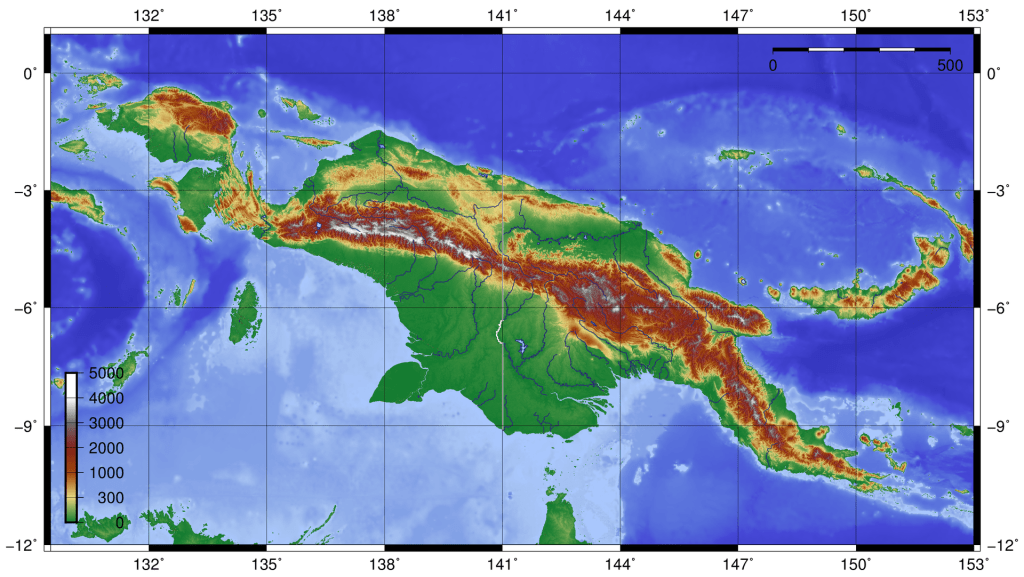
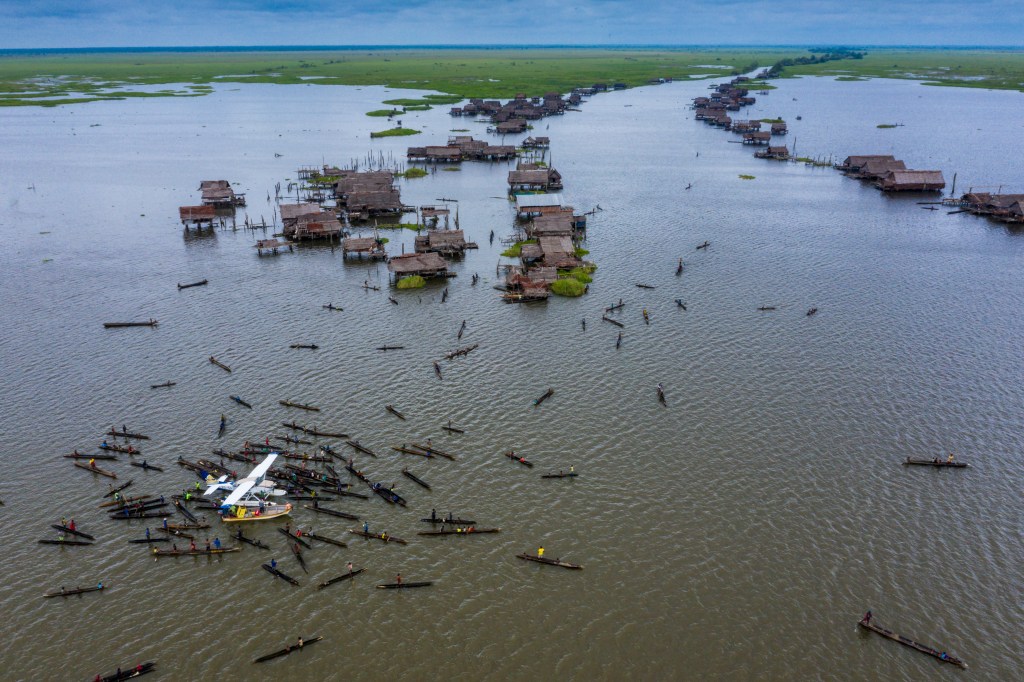
Imagine, if you will, that instead of living in a First World nation with reliable medical services, water on tap, food on the shelf down at the local grocery store, and medical services nearby, you live in a country where there are few roads, no reliable communication services, no grocery stores, no doctor’s offices, and one hospital serving 500,000 people which is anywhere from three to seven travel days away.  Oh, and your means of travel would be by canoe down a 700-mile-long river to a coastal town with the only hospital.  To many of us this might be the definition of a tropical paradise, but if facing a serious medical need, it can be deadly.  Such is the situation in the Sepik River region of Papua New Guinea, and this is where Samaritan Aviation serves.

Courtesy of Samaritan Aviation

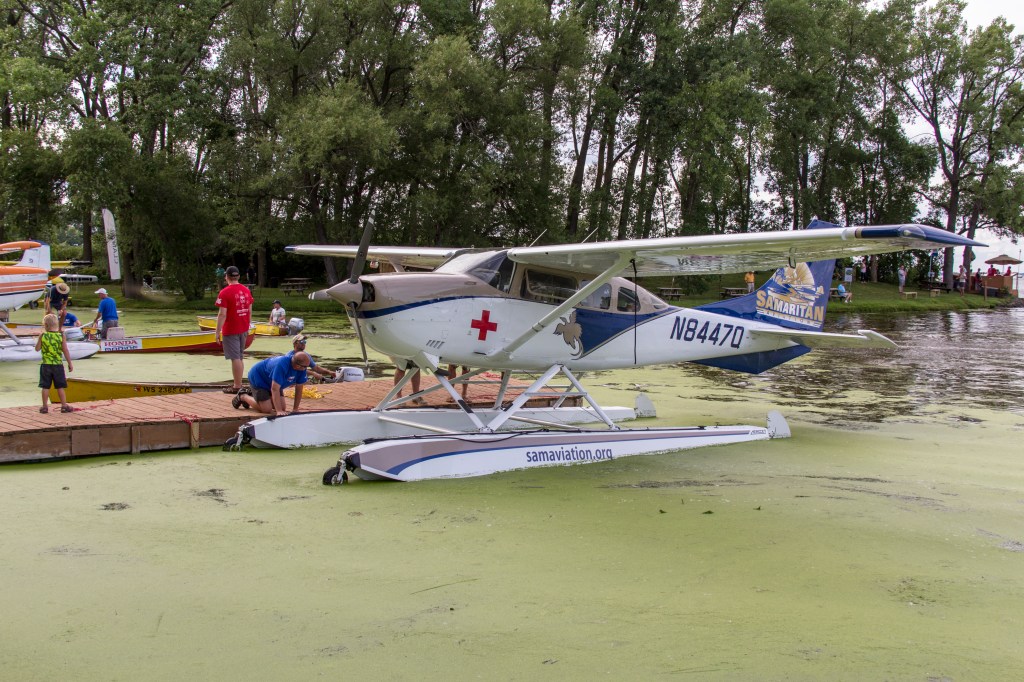
Samaritan Aviation (“SA”) is a Christian missionary organization that for 20 years now has been providing emergency medical services and delivering medical supplies utilizing Cessna 206 amphibious float planes to the people of the Sepik river region of Papua New Guinea free of charge.  SA is an example of “Grace In Action.”

“Grace in Action”.  Grace is defined as “unmerited favor”, or to Christians as “God’s unmerited favor.”  It means two things, among others: 1. It is unearned, and 2. It is free.  SA seeks to be the hands and feet of Jesus by rendering medical service to others who would otherwise be unable to obtain it or afford it; therefore, their ministry is Grace in Action. They save many lives annually through their ministry.

WHERE?

“Wait a minute!” you say. “Papa who?”

Courtesy of Wikipedia

As a typically geographically-challenged American, I had to do some research to understand the situation and the nature of SA’s work.  The island of New Guinea is the second largest island in the world and the largest island south of the equator (https://en.wikipedia.org/wiki/New_Guinea.)  The western half of New Guinea is part of Indonesia, and the eastern half is Papua New Guinea (“PNG”).  PNG was under Australian administration from the time the Germans lost it as a colony following World War I until 1975 when PNG became an independent country and part of the British Commonwealth.


PNG is considered to be mostly a tropical rainforest region.  It has rugged mountains, lots of rainfall (between 17 and 20 days a month), and long, flowing rivers. Infrastructure is costly to build and very limited outside of the coastal area.

Courtesy of Wikipedia

COMMUNICATION CAN BE AN ISSUE

Courtesy of Samaritan Aviation

Wanna learn the lingo?  Well, PNG has more languages than any other country with over 820 indigenous languages. This represents 12% of the world’s total number of languages and  most of these languages have fewer than 1,000 speakers.  While English is the official language of the government, few speak it fluently outside of those highly educated or in government.  The language of commerce is Tok Pisin (commonly known in English as New Guinean Pidgin or Melanesian Pidgin), so if you can pick up on that language you can get around. (https://en.wikipedia.org/wiki/Papua_New_Guinea)

WHAT SA DOES AND HOW THEY DO IT

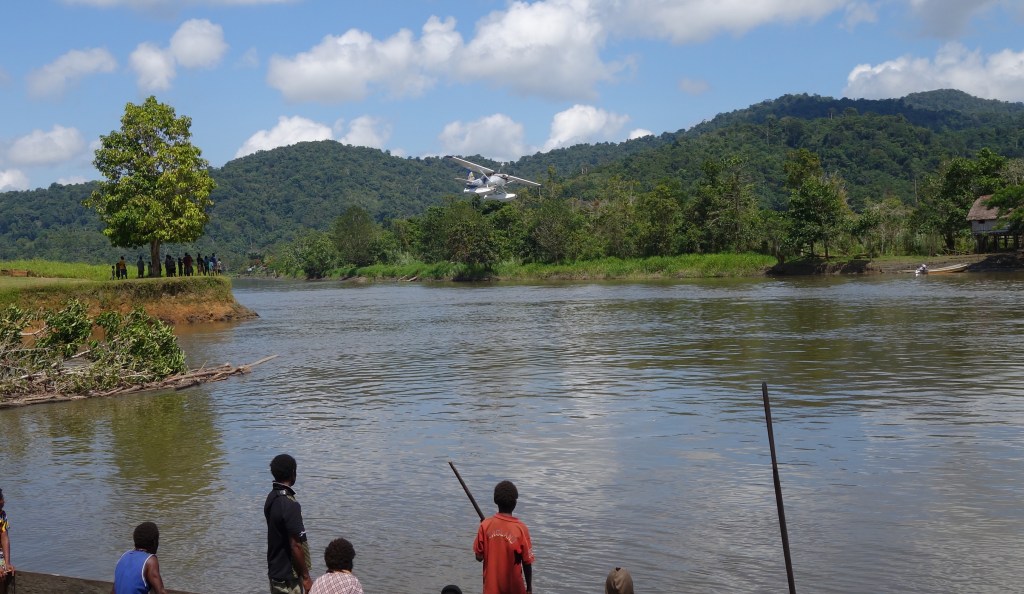
In its twenty years of operation, SA has flown thousands of life-saving rescue missions and has delivered more than 215,673 lbs of medical supplies impacting more than 100,000 people annually.  There are no roads where SA flies, and there are few mountain runways cut out of the terrain and vegetation. Therefore, SA uses the serpentine, 700 mile long Sepik River as its landing strip.  The most common emergencies are pregnancy/birth complications, highly venomous snake bites, malaria, and wounds from tribal conflicts.

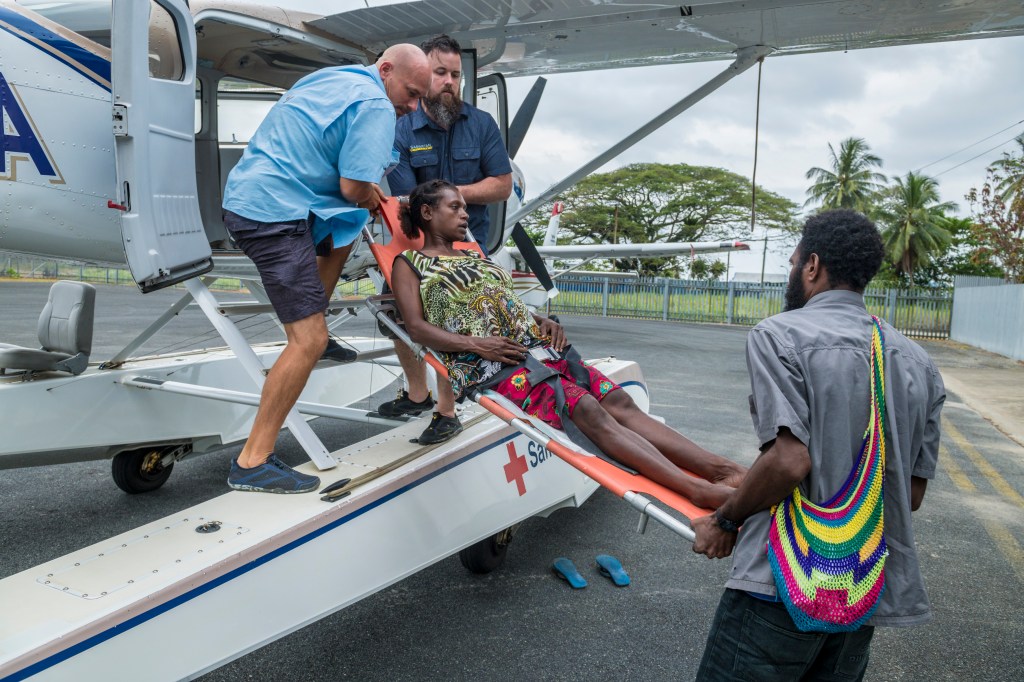
 The non-turbine aircraft that best fits its mission is the Cessna 206 on amphibious floats.  The 206 has a large payload capability, can be modified with double doors in the back to accept patients on stretchers, has good flying characteristics and excellent range.

Author’s Photo

The tropical nature of the region makes each landing on the river a new adventure every day.  Tropical rainfall can result in the river rising or falling several feet in a day or two, and the resulting flows result in debris off all types popping up at any time, any place in the river.  Assessing the landing location must be done every flight, and there are times conditions do not permit landing.  The decision not to land can be a heart-rending condition.  “If you know that a snake bite victim sitting in that canoe on the river waiting for you is going to die if you cannot land, it makes it very hard to say “No”, said founder, Mark Palm.  Fortunately, those occasions are rare.

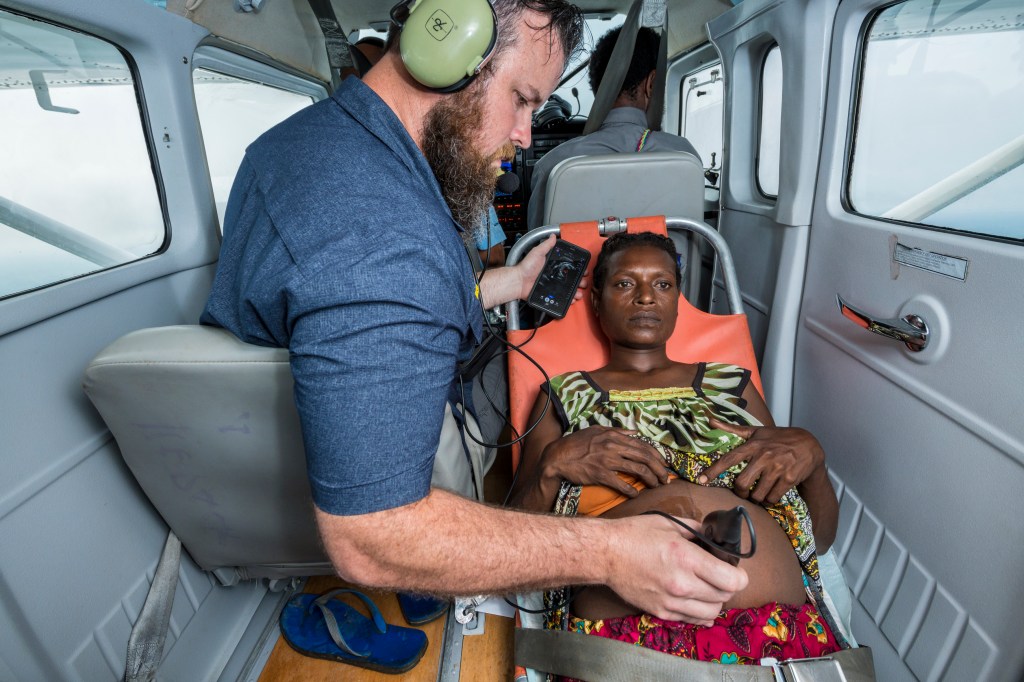
The typical crew is a pilot and a trained emergency-response nurse.  Upon landing, the nurse will administer anti-venom, assess a patient, deal with malaria cases, etc.  Patients that are being evacuated are placed on a stretcher and loaded in the airplane. It is normal for a family member or friend to travel with the injured or ill patient.   Thirty-nine percent of their transports are pregnancy complications where the life of the mother and baby are both at risk, twenty-four percent are disease or illness, and thirty-eight percent of their flights are the result of trauma.

THE ONLY HOSPITAL – BRING YOUR OWN AIDE

There is only one hospital to serve more than 200,000 people on the north side of the country and it is located on the coast in Wewak.  Unlike American hospitals, the hospital staff do not feed, clothe, or render services outside of necessary medical services. It might serve us all well to think of PNG the next time we are frustrated when it takes a nurse 15 minutes to respond to the call button in an American hospital. The traveling companion is as important to the care of the patient’s personal needs as are the medical staff are in Wewak. Volunteers and missionary workers with SA also meet with and seek to provide support to their rescued patients as time and resources allow.

Courtesy of Samaritan Aviation

THE CALLING AND THE DREAM

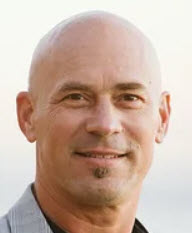
SA is the dream of Mark Palm.  Mark received the call to serve in a foreign country as a teenager on a mission trip to Mexico. His father was a minister who ran ministries serving underprivileged people in California, so the call to serve was probably not a surprise, but, I suspect, the location might have been.

Mark Palm

 From that point forward, his focus was on fulfilling his calling.  His vision became further defined as he matured, and he decided to become a medical missionary pilot.  The process of starting such a ministry from scratch was not quick, it took many years, and there were an abundance of obstacles in the way.  Mark, however, is an excellent planner and he had the patience to work the plan.

In order to be a medical missionary pilot in remote areas of the world, the pilot needs three things: 1. A good theological background, 2. A commercial pilot’s certificate with appropriate ratings (seaplane in this instance), and 3. Be your own certified airframe and powerplant (A&P) mechanic.

Mark attended Bible college to get the theological background, and then underwent the education and training necessary to obtain both his A&P license and the needed pilot ratings.  After several years of effort to complete the foregoing, he put in time working for others to get the experience he needed beyond the “book-learning” to launch his ministry.

His call led him to start his ministry in the remote country of Papua New Guinea.  One does not just pack a suitcase, grab the next flight, and announce “Here I Am!”  So, continuing to work his plan, Mark began raising the financial support needed with the help of family and friends and began looking for the airplane that would be needed.

Lest you think fundraising for a start-up ministry is easy, Mark and his friends sent out several hundred fundraising letters hoping for a multi-thousand dollar response to give the new ministry a good base. Should be easy, right?

The response, instead, was an average of a dollar a letter – less than $1000.  Going back to the drawing board, Mark and his friends figured how to raise money, and managed to get the funds needed to get started, and, very importantly, received commitments for continued donations of support once Mark and his family were overseas.

For the first five years in PNG it was Mark and his family and the one airplane.  He was on-call 24/7, lived with a cell and satellite phone, and had an immediate impact by saving a large number of lives.

The ministry has now grown to four pilots in addition to Mark, two mechanics, a medical director, and a director of staff development and mission engagement; each of whom raise their own individual support from donors so they can work in PNG.  There are also locals who serve as hangar staff, hospital ministry assistants, and other positions.  In addition to staff located in PNG, there are people working hard in the U.S. to develop funding sources, locate and obtain resources that are needed, and locate the people willing to serve in a missionary capacity in PNG.  There is a lot going on as SA continues to grow.   Two aircraft are in use, a third is on the way if it is not there already, and there are further expansion opportunities to serve PNG.

THE MONEY ASPECT

As mentioned previously, SA is mostly funded through donations from those of us who enjoy life in a first world country.

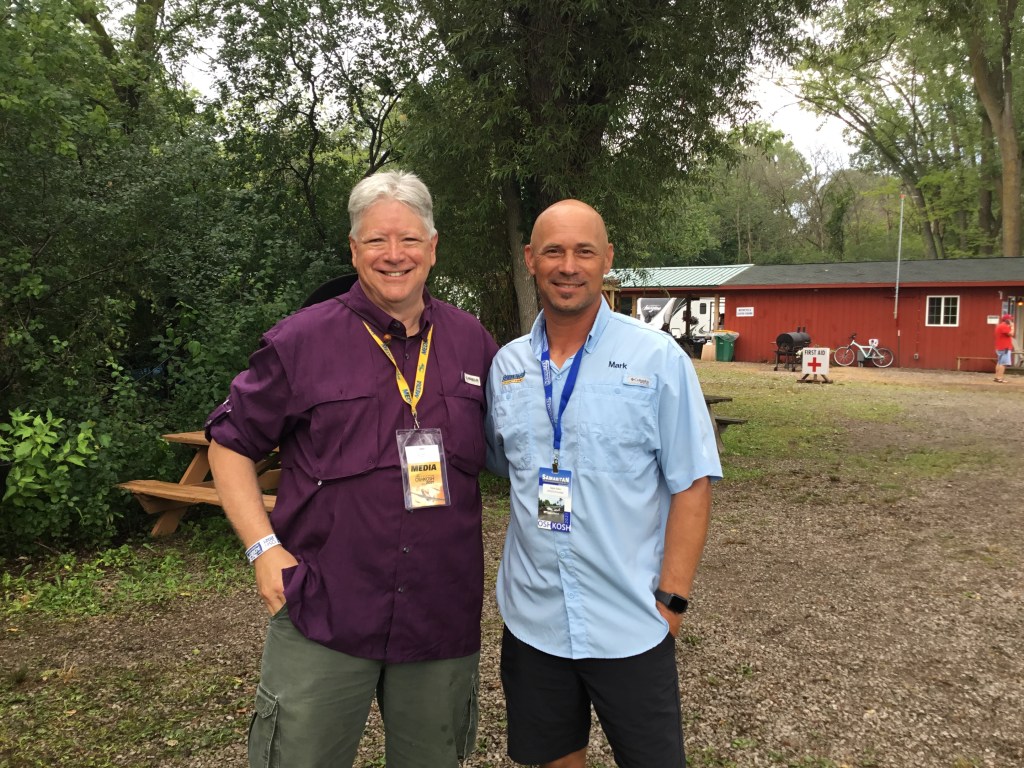
Mark Palm and the author at OSH21

 Mark and other SA team members have built a close-working relationship with the government of PNG and it now provides funding that equals about twenty percent of the SA budget.  Mark stated that he felt it was important that the government demonstrate its support for its people through taking some financial responsibility for the service provided because there is no one else providing the emergency air medical services delivered by SA.   The deep cooperation with PNG entities is also evidence through their close relationship and coordination with the hospital staff and other service providers.

Samaritan Aviation is open about its finances. Its financial statements are posted and available through a drop-down link on the SA website. 90 cents of every dollar goes directly to ministry.  6 cents goes to administrative overhead, and four cents goes to fundraising.  They have been awarded the Platinum Seal of Transparency, which is rarely given.

Ways to give

Samaritan Aviation accepts monthly donations, gifts for specific projects and items, one time gifts, or a program that interests me the most:  Fuel for Life.

Courtesy Samaritan Aviation

Fuel for Life asks donors to donate one barrel of aviation gas per year. (They have to ship avgas in by the barrel because it not otherwise available.).  At the end of 2021, each barrel cost $600 U.S. They burn 250 barrels of avgas a year.  So, if 250 people will give $600 a year their needs for fuel would be met. (At least before the recent price increases in 2022.) It does not have to be given all at once.  A $50 per month donation would buy one barrel of fuel per year.

You may explore options to donate at https://samaritanaviation.org.

Charitable aviation is a resource we all need to both respect and support. I hope you will consider supporting this charity which has earned my trust and respect – and I don’t give that out lightly!

Until next time:

Clear skies and tailwinds!

Gary Risley

©March, 2022 RizAir Blog 21

Racing The Storm – The Cherokees Arrive at Oshkosh!

Racing The Storm – The Cherokees Arrive at Oshkosh!

Shortly before this blog was written, it was announced in early May that Airventure 2020 was being cancelled due to the Covid-19 pandemic.  This is a huge disappointment to hundreds of thousands of aviators and spectators as the Mecca of private aviation will not be open this year.  There are participants who plan their entire year around this fantastic event and the disappointment will be keen.

I will try to give a bit of the feel of the thrill of getting there in this blog.  In RizAir Blog 15, the adventure of traveling from Farmington, NM to the Cherokees to Oshkosh meeting point (Waupaca, WI) was described.  Having arrived after shooting the approach into a nearby airport and then a scud-run to nearby Waupaca, we retired to the hotel to prepare for the adventures to come the next day, Friday, when the practice run prior to the Saturday departure for Oshkosh would occur.

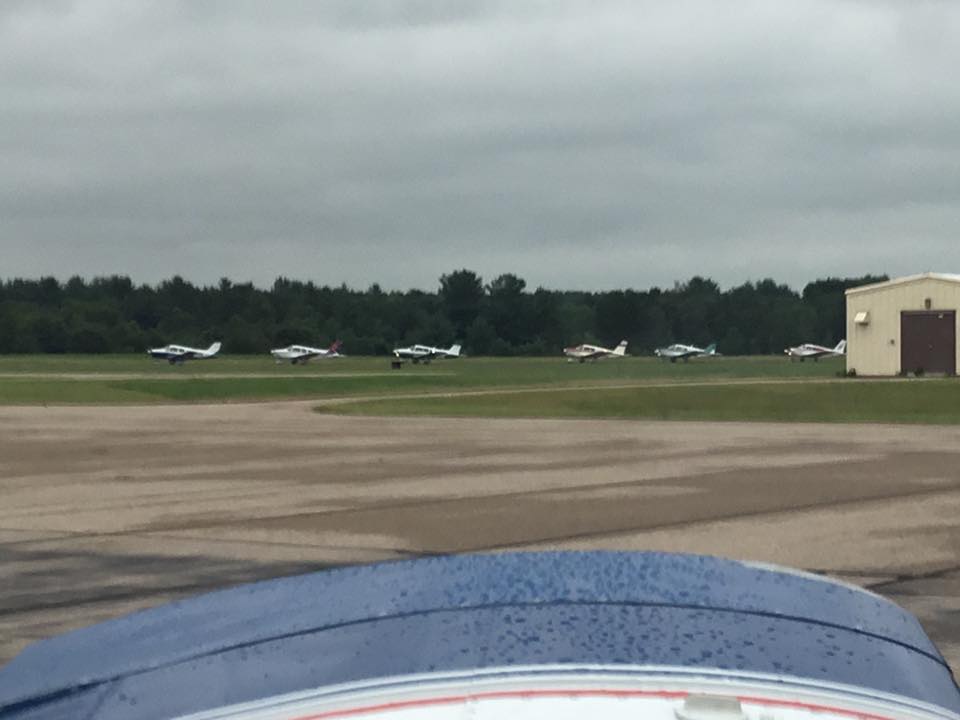
We awoke to a pleasant summer day in KPCZ, partly cloudy and warm, but not too humid in the morning.  The morning gathering and safety briefing was scheduled for around 9 a.m. Saturday morning and Annette, Ed, Jeanne, and I were there early.  As things geared up we were assigned our “flight” numbers and the people with whom we would be flying.  The planes would take off in groups of three, and there were 39 aircraft.

Pre-flight briefing – a key to safety of the entire group – July, 2019.

I was assigned Mike 3. RizAir1 would be flying formation with two turbo-charged Saratogas – one owned by another attorney and one by a medical doctor. I would be the last plane in the formation other than “Tail end Charlie”, call sign “Cherokee Tail”, a Cherokee 6 flown by the one and only “Ferg.”  I am sure that by putting me at the back they figured I could not do too much harm!

Actually, I was very fortunate because Chip and Dan were FAST (Formation and Safety Team) certified, which is unusual for guys flying Saratogas.  Most civilian formation flying is done with smaller and lighter single engine aircraft, the Van’s RV-6 being one example. Chip and Dan’s extensive experience and advice were very helpful to this rookie.

As I have stated in previous blogs, safety is always the number one priority.  We sat with our wingmates in our flight.  The safety briefing was direct and thorough.  The flight plan was laid out, and the “conga line” process to get the airplanes in order of departure was reviewed in detail and all questions answered.  The briefing was concluded, and we were dispatched to our aircraft.

A brief aside to compliment the manager and staff of the Waupaca Airport.  Bonnie was a gracious hostess and, visiting with her, one could hear joy and enthusiasm in her voice about hosting CTO once again.  Her attitude and that of her staff are greatly appreciated because one could see staff being annoyed at the extra work that such events bring.  CTO leadership makes certain to take care of Bonnie and clearly expresses our appreciation for what Waupaca does for us.

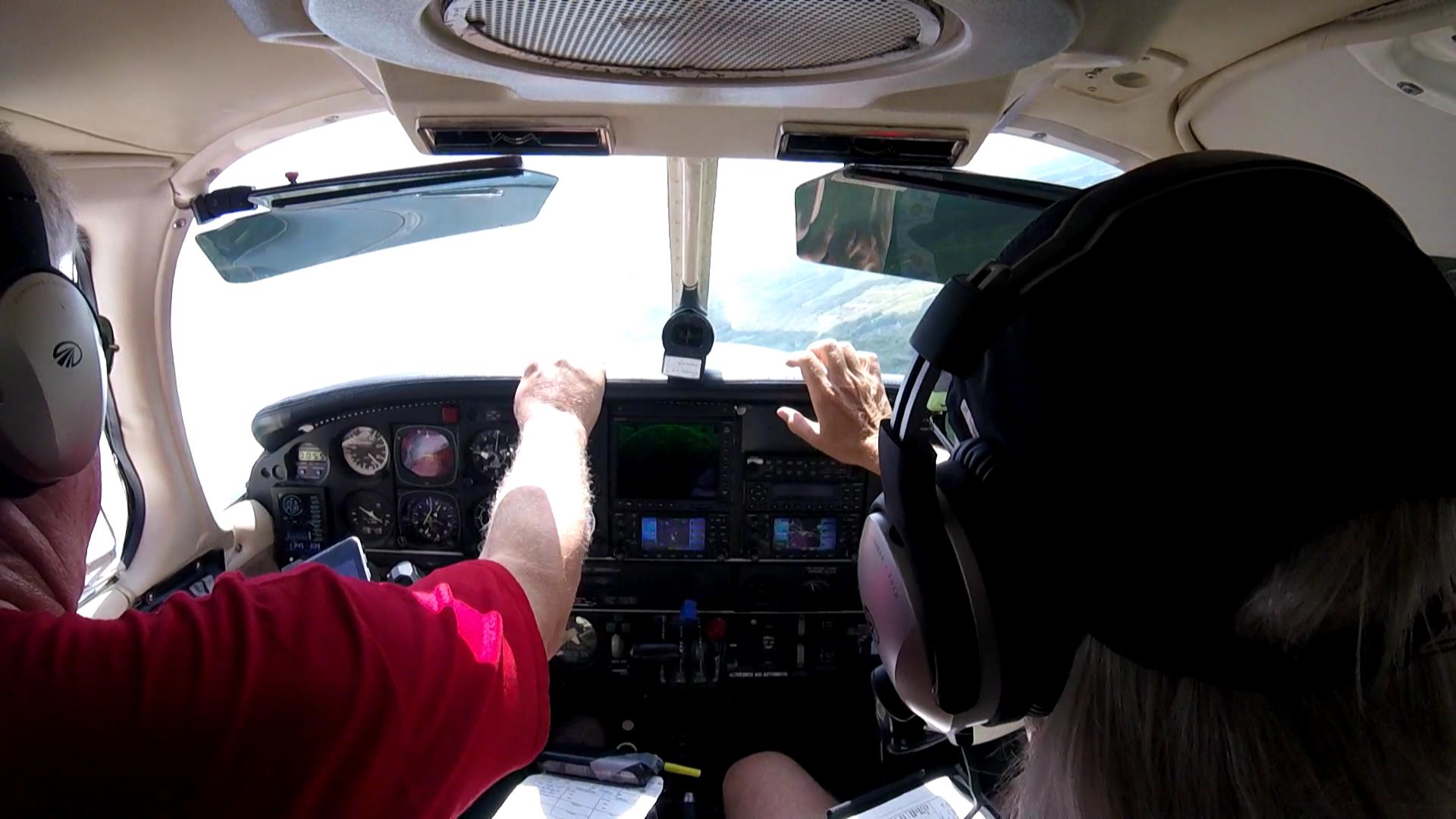
Back to the story:  Everyone was coming along for the ride on the practice run.  What a daring group of people! Ed Notson would be lending me his eagle eyes and keen observation skills up front.  My wife, Annette, and Ed’s wife, Jeanne, were “ballast” in the backrow seats.  Very soon it was time for engine start, everyone checked in by alphabetical order and number.  The check-in went smoothly, and the conga line started.  We were watching carefully for our wingmates, calculated our entry, and tried not to screw the whole thing up.  I guess that was one good thing about being at the end of the line.

The conga line (a/k/a as the “baby elephant walk”) crossed the main ramp area near the fuel pumps, went behind a set of hangars to the departure end of Runway 31, taxied up that runway , and then onto the Runway  21.

2019-07-20 Conga line prior to departure

The baby elephant walk to the runway – July 20, 2019

There is a lot of prop wash at the end of the line once everyone is lined up on the runway.  Standard procedure is for the lead of a flight to roll about 15 seconds after the lead of the flight in front of him departs.  Number 2 in the flight counts five seconds from lead’s take-off roll beginning, and 3 follows 2 by five seconds. The take-off can be a bit interesting following 37 other aircraft.  Waupaca has a bit of wind shear because of a tree line, so the initial climb-out was a bit of a rodeo.  Following take-off, our job was to hustle up and settle into our number 3 slot off our lead.

The flight was a lot of fun.  Still need to work on those inside turns.  The approach to landing was a bit of an adventure.  Lots of wake turbulence.  One grabbed us and tossed us to the right.  I felt it coming and started putting in left aileron to counter, but with full left deflection the left wing was still rising and the right wing was dropping.  As airspeed dropped, I released back pressure and hit the left rudder hard, and we straightened up. A deep breath and back on course. The short final and flare were bumpy due to wake turbulence and wind shear (mild) at the airport.  It was not a pretty landing, but I was just wanting to get it on the ground.

2019-07-19 Final at Waupaca - hard right turn.

Getting tossed hard right by wake turbulence on final on the practice run – July 19, 2019.

Back safely on the ground, we went to debrief.  My first officer, Ed, a retired Air Force officer, commented he loved the debriefs because the comments were direct, issues frankly discussed, and no one got his feelings hurt.  Everyone was just wanting to get better, and the way the debriefs worked proved that point.  The flight was declared a success and a launch for Oshkosh proper was scheduled for the next morning.

Following a great banquet on Friday night, we arrived at the airport early on Saturday.  A low overcast was overhead.  The leadership was in fervent discussion regarding the weather and other matters. A storm was a’brewin’ to the west.

There were discussions about moving up the departure time, but after consultation between the powers that be, Air Traffic Control, FAA Safety Coordinators, OSH Tower, etc., the time remained the same. A very through safety briefing was held.  We would be flying low, but safely above the obstacles along the route.  The weather was expected to get worse later in the day.

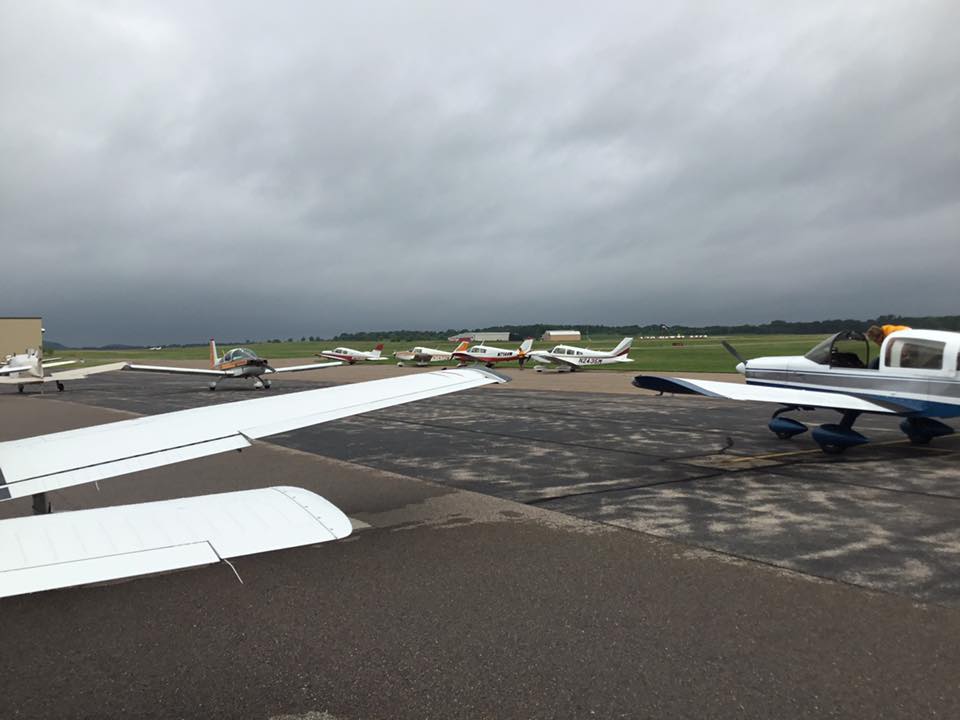
Time to saddle the horses!  Ed and I went to the airplane and did a very through pre-flight on the damp ramp.  Mike 1 and Mike 2 informed us that they were going to perform a side by side take-off and would land the same way.  I would follow in trail as originally planned, and Cherokee tail would be behind me.

2019-07-19 Post brief prep for engine start Waupaca

Prepping the planes for engine start – Waupaca – July 2019

On cue, we started our engine and waited patiently as the call-in proceeded.  Finally, the time to call “Mike-3” came and we made the call.  With everyone up and running, the Baby Elephant Walk, modified from the day before, began.

Again, on signal, everyone turned 45 degrees to the center line and did a quick run-up to make sure the systems were running properly.  Then 39 aircraft squeezed onto the runway for a coordinated take-off.

Cherokee Lead started his take-off roll, and every 5 to 6 seconds after that, another airplane started down the runway.  Mike 1 and Mike 2 started rolling down the runway together, and my T-tailed turbo-Lance started chasing after the two turbo-Saratogas five seconds later. I was wheels up at 9:21 a.m.

Having learned from my experience the previous day, I was expecting a fair amount of buffeting and turbulence on the first few hundred feet of the climb out.  As the nose dodged left and right, I followed Mike 2’s sage advice and used only the rudders to combat heading changes.

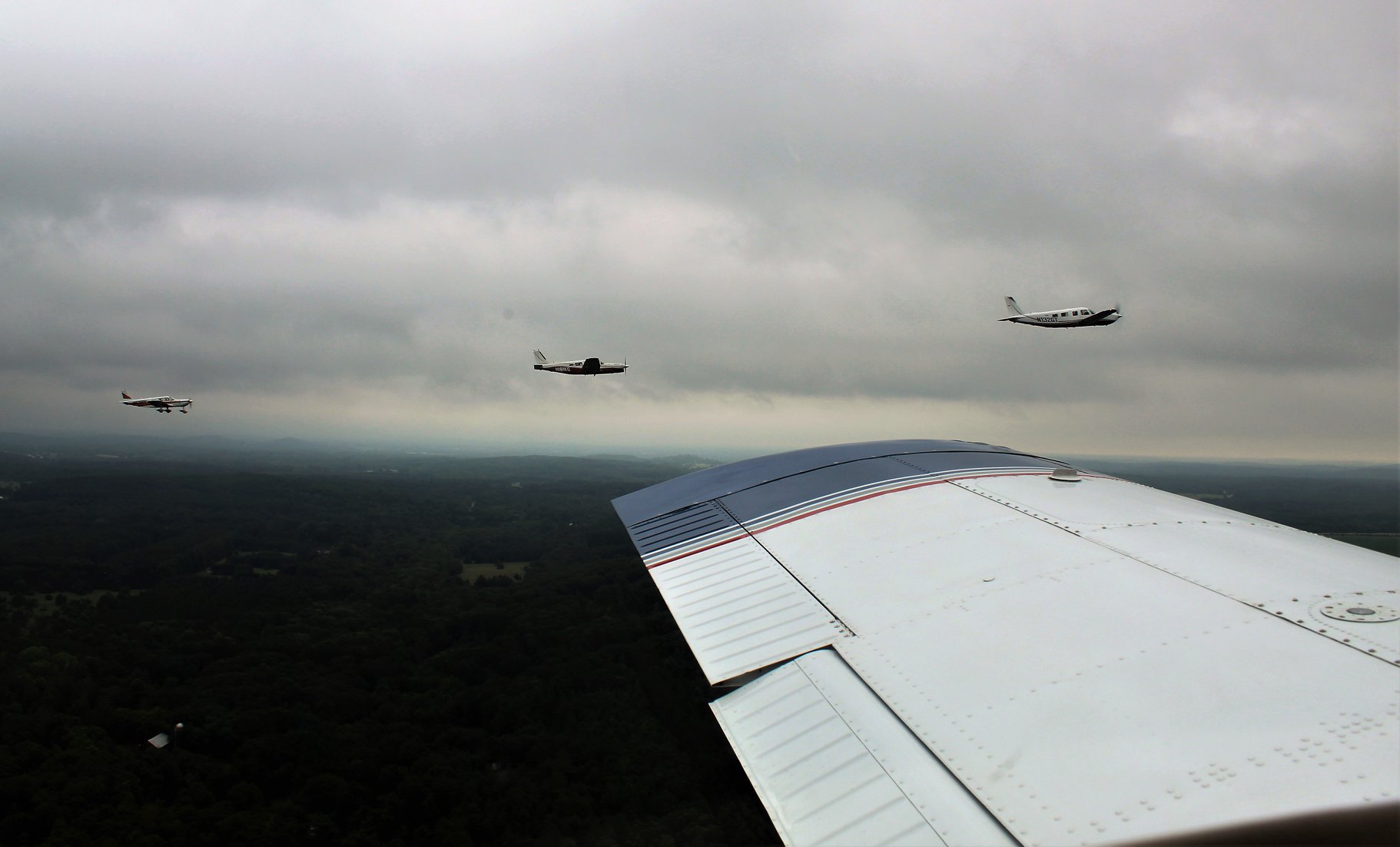
Once we were clear of the trees, with a positive rate, the gear was sucked up and the race to catch to catch the rest of Mike flight was on!  The three of us were flying with flaps “one”, and we left them there for the duration of the flight, which was to be at 90 knots.  So, I ran at 109 kts (on knot below maximum flap extension speed) to catch up to my teammates.

2020-07-20 Mike flight and Cherokee tail

Photo courtesy of Ed and Jeannie Notson

Found them, caught them, and joined the formation!  We were on the way to Oshkosh!  The trip went well until we went into “trail” 3 miles from the airport.  As Mike 1 and 2 were descending for the runway side by side, a slower Cherokee popped up out of the brush (so it appeared) at a very low altitude.  Mike 1 and 2 executed an S turn to try to regain spacing.  I held altitude and slowed as much as I dared.

As Mike 1 and 2 were beginning their flare, suddenly a wingtip vortex grabbed Mike 1’s right wing and he was pushed to his left towards Mike 2. Mike 2 recognized the problem, poured the coals to his plane and executed a go around.  Quick thinking and excellent pilot skills saved the day there.

Like Mike 1, I was supposed to land on the right side of the runway, and Cherokee Tail was behind me.  Since I was close behind the other two, I made the executive decision to move to the centerline just before I flared because I was concerned the same vortex might grab me as well.  No problems with the flare, and we arrived safely at KOSH and rolled out to join our companions.  What a thrill it was to land at the home of Airventure!

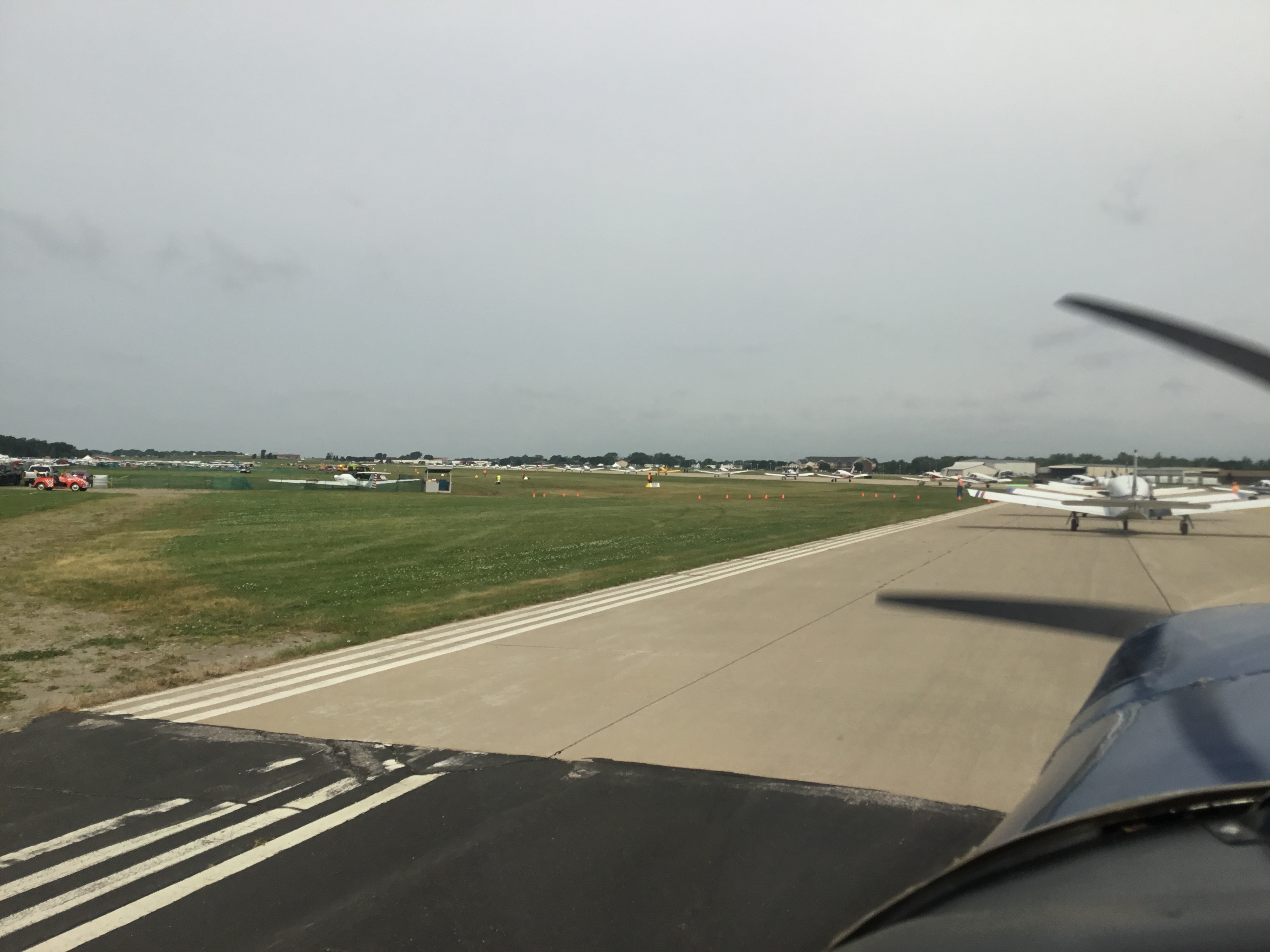
Another conga line to parking on the grass.  Those of us with heavier singles were concerned about possibly sinking into the ground.  That is a particular problem for a T-tail since the nose wheel cannot be lightened by back-pressure on the yoke and running power to put prop wash over the elevator.  I knew that once I left the pavement I would have to keep moving.  I let extra space build between me and the airplane ahead of me.  When the turn came, extra power was applied, and we managed to get to the parking space.

IMG_0063

The CTO taxi-in at KOSH – July, 2019

Pushing the airplanes back into their slots was a chore!  It was hot, it was humid, we could look to the west and see a gigantic front coming towards us, and the grass was damp and the ground soft.  After much heaving and grunting, with the help of our fellow aviators, we got the birds all lined up.

IMG_0070

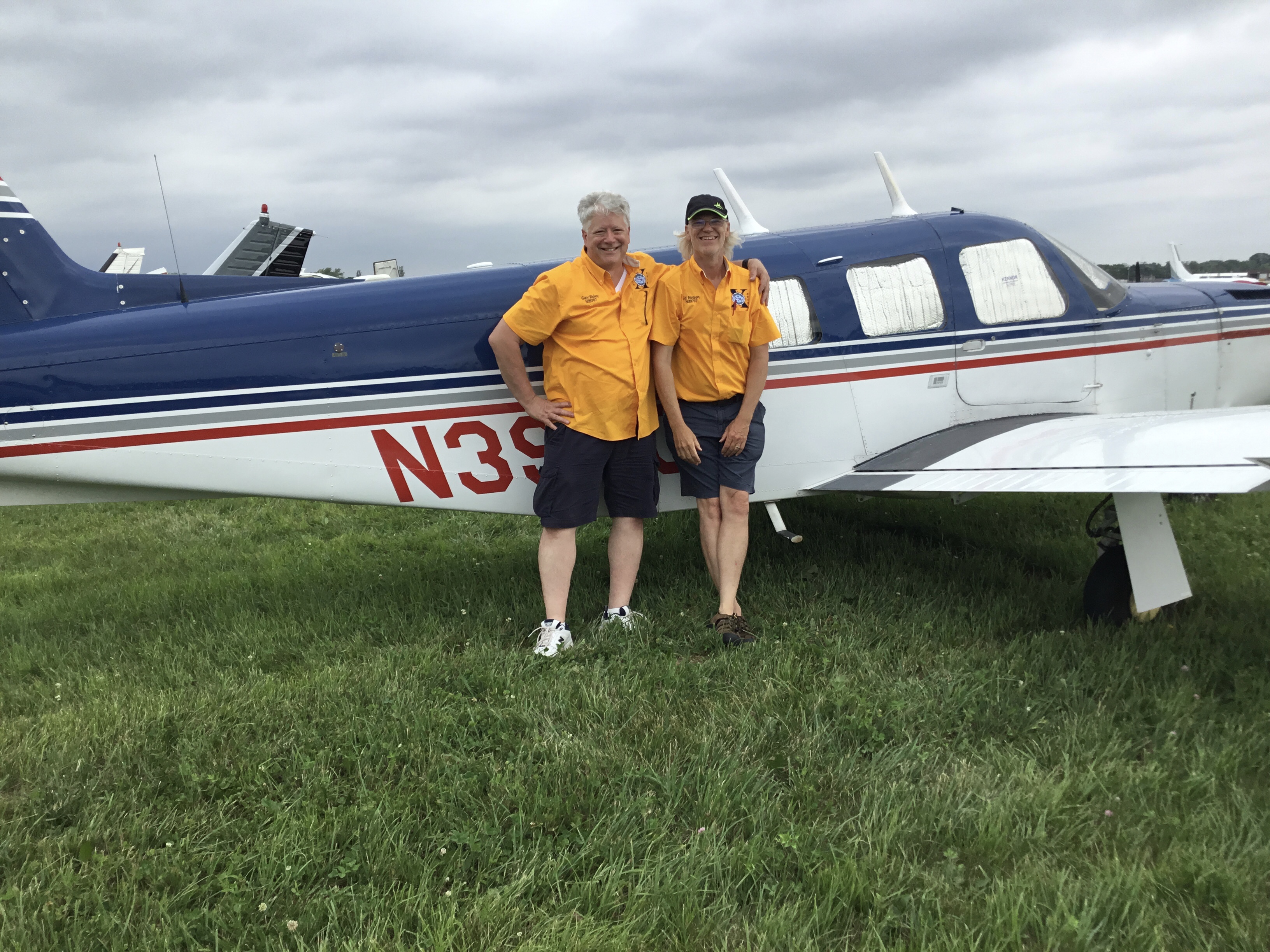
Gary Risley (left) Ed Notson (right) after getting RizAir1 into its tie-down spot- KOSH June 2019.

A quick debrief was held, a short follow-up with my wingmates, and we were turned loose to enjoy Oshkosh.

2019-07-20 Post-OSH arrival debrief

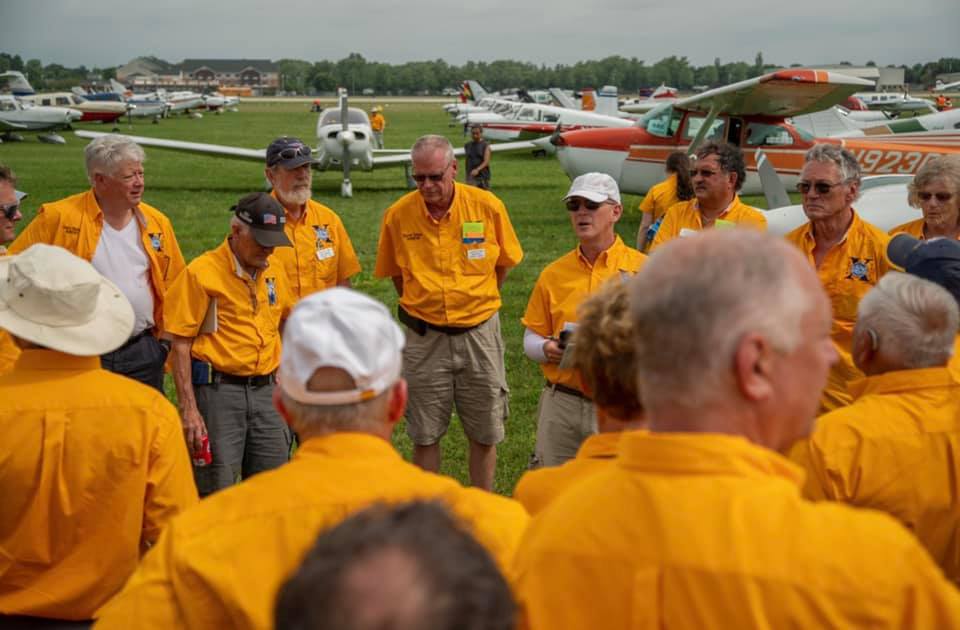
Post-arrival debrief. Photo credit to EAA photographers Andrew Zaback, Lewis Berghoff and Crystal Perez! (See more of their excellent photography on the Cherokees To Oshkosh Facebook page)

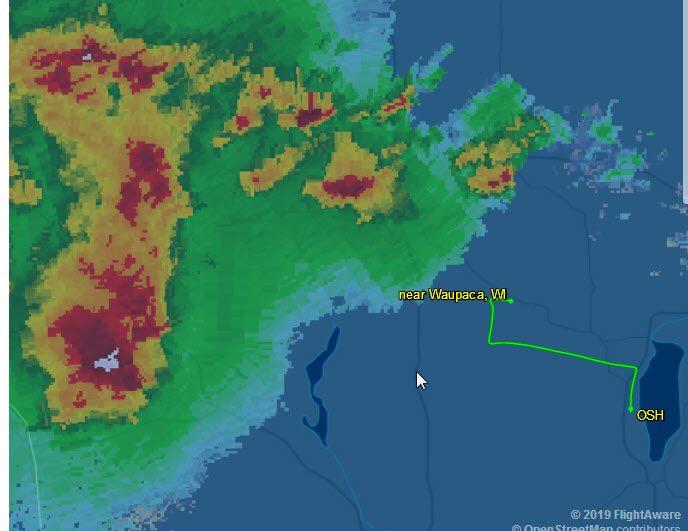
Between an hour and an hour and a half later, a frog-strangler storm hit that converted the 2019 event into “SploshKosh II” – a repeat of “SploshKosh” from 10 years previously.   Cherokees To Oshkosh was the only mass-arrival group that got in on Saturday, and it was Monday before aircraft with tundra tires were allowed in, and Tuesday before things opened up for everyone else to arrive.  We had placed RizAir1’s tires on large plastic pads used by RV’s on soft ground, driven in our “Claw” anchor points, and secured the flight controls.  She survived the ordeal quite well and was anxiously awaiting our return for the departure home on Thursday of that week.

2019-07 Racing the Storm - Scrren Capture from Flight Aware

Screen capture from FlightAware.

Here is the link to my Garmin 360 video of the trip to OSH.  It is edited from 40 minutes to 16 minutes, but it conveys the sense of the trip: https://www.youtube.com/watch?v=K1rr8YpSYsU&t=12s.

Enjoy, we hope to see you at Airventure 2021,  and until next time,

Clear Skies and Tailwinds!

Gary Risley

RizAir Blog 16

©June 2020