By Gary Risley
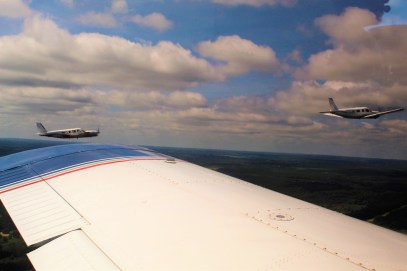
How does one take 10,000 airplanes, with pilots varying from seasoned professionals to those less than 100 hours of flight time, flying everything from no-radio birds traveling at a maximum speed of 70 miles per hour to those capable of supersonic speed, and get them safely on one airport; especially, with most of the arrivals squeezed into a two to three day timespan? Very carefully!
The Experimental Aircraft Association’s Airventure in Oshkosh, Wisconsin manages to pull off the feat every year. The choreography is conducted by well-trained controllers who sound like auctioneers on the radio, a thirty-page notice to airmen published in cooperation with the Federal Aviation Administration that sets forth the procedures each pilot coming in single ship VFR is to follow when arriving and departing KOSH, and formation flights by different aircraft groups come together to somehow accomplish the goal of safely getting the very large number of aircraft onto the airfield.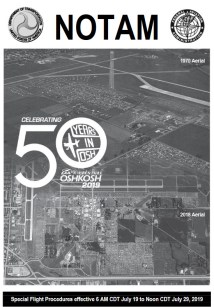
I had attended Oshkosh previously, but I had never flown into KOSH (the airport) proper; although, one year I flew with family into Stevens Point nearby and we took a chartered bus into KOSH each day as part of a gathering of Cessna and Piper owners there. Having studied the NOTAM outlining the Fisk arrival procedure for visual flight rules traffic, and having watched numerous YouTube videos of that organized chaos, I chose a different method to check landing at Oshkosh during Air Venture off my bucket list.
Each year, various groups get together to fly formation into KOSH in what are called “Mass Arrivals.” RizAir1 is a 1978 turbo-charged Piper Lance, a descendant of the Piper Cherokee 6 line. A little research revealed that there is a “Cherokees To Oshkosh” mass arrival group that was participating for the tenth year in 2019. Other similar groups consist of the “Mooney Caravan”, the Cessnas To Oshkosh, and the Bonanzas To Oshkosh. I am sure there are others.
You may be wondering – formation flying? Is that safer than flying the Fisk Arrival? Are you ex-military? Have you flown formation before? Yes, it is as safe or safer than the Fisk Arrival. No, I am not ex-military. No, I have not flown formation prior to planning to do so this year.
Fortunately, the folks who run Cherokees to Oshkosh have a plan for rookies like me. I went through an application process to be able to join the group. Although the number of aircraft was expanded to fifty, they quickly filled this year, and alternates were listed. I was fortunate enough to get my application in early (January) and I was accepted.
One does not just show up the day of the arrival and decide to fly formation. From the time that we are baby pilots, it is beaten into to us to maintain significant distance from any other aircraft around us, even if that means going around the pattern, leaving the airspace, etc. We were also taught very specific rules about coordinated flight by keeping in “balance” the rudder, ailerons, and elevator when we turn. Formation flying throws much of that ingrained training out the window.
So how does one go from rank rookie to approved formation flyer? The organizers of Cherokees to Oshkosh are well-trained themselves and very safety conscience. They hold “mi ni-clinics” around the country each year to train the rookies and refresh those who have previously participated in the mass arrival. Attendance at one of the clinics is mandatory if one is to participate in the arrival. They go to extraordinary lengths to accommodate everyone they can, and they donate their time, money, and aircraft for the benefit of the rest of the group. The other groups mentioned also require attendance at a training clinic in order to be eligible to join the mass arrival.
The CtO organizers are extremely helpful and go out of their way to get things done. One does not leave a mini-clinic ready to join the Blue Angels or the Thunderbirds, but at least we won’t swap paint – the stated goal of Dwane “Ferg” Ferguson, the recently retired Director of Operations.
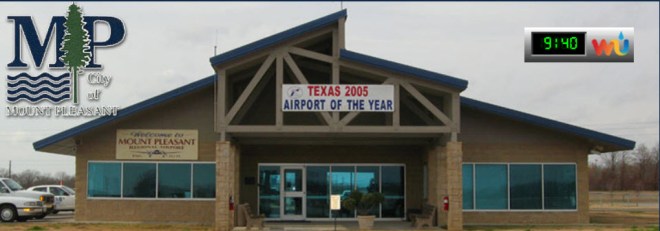
I attended the clinic in Mt. Pleasant, Texas. For the first sortie, I was an observer riding with an experienced pilot. Whoa! It isn’t natural to be that close to another airplane in flight! And the lead starts to look really big at the start of a turn towards your airplane.
Each sortie is planned and then briefed with the pilots before launch. Ed LeBlanc, the new director of operations beginning in 2020, organized our clinic and handled the briefings.
Station keeping and concentration on the job are paramount. Have you heard the saying that “the lead dog is the only one who gets to see a change of scenery”? Usually the saying is associated with a picture of a sled dog team. Flying formation is like that. The only one who sees the scenery is the lead aircraft. Everyone else has eyes only for the lead aircraft.
The first flight as pilot? Well, it was a bit of an adventure. Probably recognizing I was going to need extra guidance, the great Ferg himself served as my safety pilot on my first sortie. It was rough. The Lance/Saratogas are nose heavy with two adults up front and nothing in the back. I was fighting trying to stay at airspeed and altitude while station-keeping on the lead. Finally, Ferg took the controls and he exclaimed, “Whoa, I see the problem”. We had run out of nose-up trim and I was having to pull back on the yoke all the time to hold position.
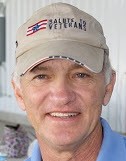
We survived the sortie, but I needed a solution to the center of gravity problem. An idea! I went to the gentleman at the counter of the fixed base operator and asked if I could borrow two cases of oil to put in the back of my airplane. He looked at me kind of funny, but when I explained why he said “Sure”, gave me a ride to the storage shed, and we loaded up on cases of oil. (I later went back and borrowed two more cases for good measure.)
What a difference the weight in the back made! I could trim the airplane, could stay in position, and everything smoothed out on the second sortie. The hardest part is keeping the airspeed down. The CtO airspeed is 90 knots indicated. The turbo-charged Lance is almost hanging on its prop at that speed. One of the other wingmen commented that he was surprised as how high the aircraft nose was during the straight and level flight. But, the airplane will fly there and it was my job to make it happen.
The third sortie was a sawtooth drill – left and right turns by the lead. The Lance has plenty of power to increase speed and fly the outside arc while maintaining position. The turns into the airplane, well it’s a little tougher to put on the brakes, pull the power, get the speed down, and stay in the same relative position to lead. More work needed there.
The fourth sortie was a blast. They were crazy enough to turn me loose solo! We took off in a three-ship element followed by a two-ship. I was “Alpha 3” in the lead group. Sometimes I amaze me! The flight went well, not perfect, but well. Turns in both directions were acceptable and within limits.
Each sortie is debriefed. The discussions are direct, frank, but courteous. One cannot wear his feelings on his sleeve in a debrief, but the goal is to make everyone safer and better.
Well, wonders of wonders, I was signed off to participate in the mass arrival! Good deal! But there is one more phase.
The group met in Waupaca, Wisconsin to practice before flying into KOSH. The Friday’s briefing and sorties were mandatory to participate, so don’t be late! I was hoping they didn’t decide to tear up my approval card on Friday.
The Cherokees to Oshkosh mass arrival was scheduled for the Saturday morning before Airventure starts. The other mass arrivals were scheduled for Saturday also. That is a story for another blog!
So how is this safer than the Fisk Arrival when I am flying close to two or more airplanes? Well, because I only had to worry about one airplane really – the lead, and not 500 other airplanes all trying to hit the Fisk Arrival at the same time. All I had to do was not swap paint as Ferg commanded. I knew I could do that much. So I got to fly into KOSH with a bunch of new friends, whom I already knew are great people to be around, and I got to land when the airfield is closed to all other arrivals except us.
Seemed like a good deal to me. Flying in a mass arrival, I was confident that I could get there from here. Someone else has done most of the work and laid the road. I just need to stay between the bar ditches.
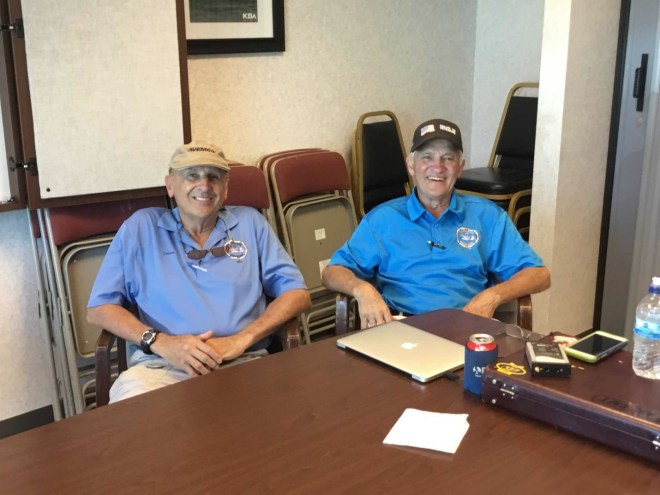
If you are a pilot, you should consider getting basic formation flying training and join a group flying a mass arrival. I think you will really enjoy the experience. If you want to go with the Cherokees to Oshkosh group, you better get your application in as soon as they open up – usually in January of each year. Here is there weblink: https://cherokees2osh.com/. They also have a Facebook page: https://www.facebook.com/Cherokees-to-Oshkosh-179484018761023/.
Until next time – Clear Skies and Tailwinds
Gary Risley
Next blog: Racing the weather into “Sploshkosh!”
RizAir Blog 14 Dec 18 2019 Copyright 2019

 RizAir - A Private Aviation Journey